For Laboratory Research Use Only
This product is a reference compound for in-vitro research only. Not for human consumption, diagnostic, or therapeutic use. Not a drug or supplement. Sold only to qualified researchers and institutions.
Healing & Recovery
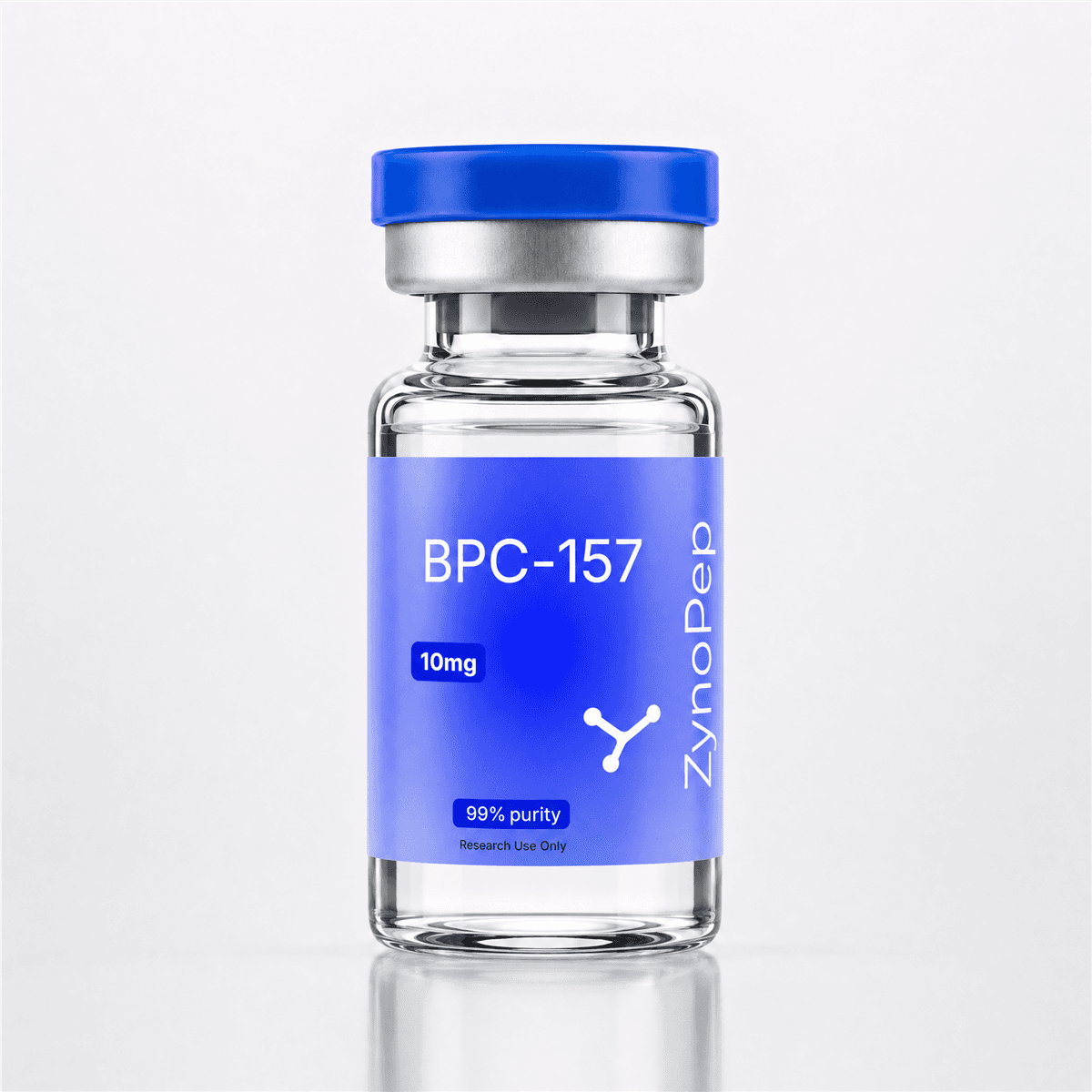
BPC-157
10mg vialPentadecapeptide BPC-157
Synthetic 15-amino-acid sequence reference compound. Lyophilized white powder for in-vitro research use only.
per 10mg vial
- ≥99% HPLC purity, MS-confirmed identity
- Batch-specific COA with every order
- Synthesized & lab-tested in the USA
- Fast, tracked free shipping
- Money-back guarantee on unopened vials
Product details
Chemical Specifications
Identity & Composition
- Purity
- ≥99% (HPLC)
- CAS Number
- 137525-51-0
- Molecular Formula
- C62H98N16O22
- Molecular Weight
- 1419.55 g/mol
- Appearance
- Lyophilized white powder
Sequence
Gly-Glu-Pro-Pro-Pro-Gly-Lys-Pro-Ala-Asp-Asp-Ala-Gly-Leu-Val
Storage & Handling
Storage Conditions
Store lyophilized powder at -20°C, protected from light and moisture.
Laboratory Handling
- Use appropriate PPE: lab coat, nitrile gloves, eye protection.
- Handle in a fume hood or well-ventilated area.
- Keep container tightly closed when not in use.
- Store reconstituted samples per laboratory SOPs.
Note: All handling guidance is for laboratory use only. We do not provide use, dosing, or administration instructions.
COA & Testing
A batch-specific Certificate of Analysis (COA) is included with every order. Third-party COAs available upon request.
Testing Methods
- HPLC (High-Performance Liquid Chromatography)
- Mass Spectrometry (MS)
- Endotoxin Testing (LAL)
- Net Peptide Content
Documentation
- Batch number on every vial
- Independent third-party verification
- Manufacturing date and lot
- Available digitally via QR code
- Synthesized & packaged in the USA
Other Reference Compounds
GLP-3
Synthetic multi-agonist peptide reference compound. Lyophilized white powder for in-vitro research use only.
≥99% purity
$70
MOTS-c
Synthetic 16-amino-acid mitochondrial-derived peptide reference compound. Lyophilized powder for in-vitro use.
≥99% purity
$200
5-Amino-1MQ
Small-molecule quinolinium reference compound (NNMT inhibitor scaffold). Crystalline powder for in-vitro research use only.
≥99% purity
$60
Research & references
Frequently asked questions
Is this BPC-157 intended for human use?
No. This BPC-157 is a research reference compound sold for laboratory research use only (RUO). It is not a drug, supplement, or food, and it is not intended for human or veterinary administration, diagnosis, or therapeutic use.
What purity and documentation come with the product?
Each 10mg vial is assayed to ≥99% purity by HPLC with identity confirmed by mass spectrometry, and ships with a batch-specific Certificate of Analysis matched to the vial lot number.
What is the CAS number and molecular weight of BPC-157?
BPC-157 carries CAS number 137525-51-0, with molecular formula C62H98N16O22 and a molecular weight of approximately 1419.5 g/mol. Full parameters are listed on the data sheet.
How should BPC-157 be stored and reconstituted?
Store the unopened lyophilized vial as described in the included documentation. Solvent compatibility, aliquoting, and reconstituted-state shelf-life guidance for laboratory handling are detailed in the storage and reconstitution guide.
What does the preclinical research on BPC-157 show?
Published studies are confined to in vitro and rodent models, where the peptide has been associated with angiogenesis-related signaling and tissue-repair endpoints. These observations are limited to non-human experimental systems and do not support any human use claim.